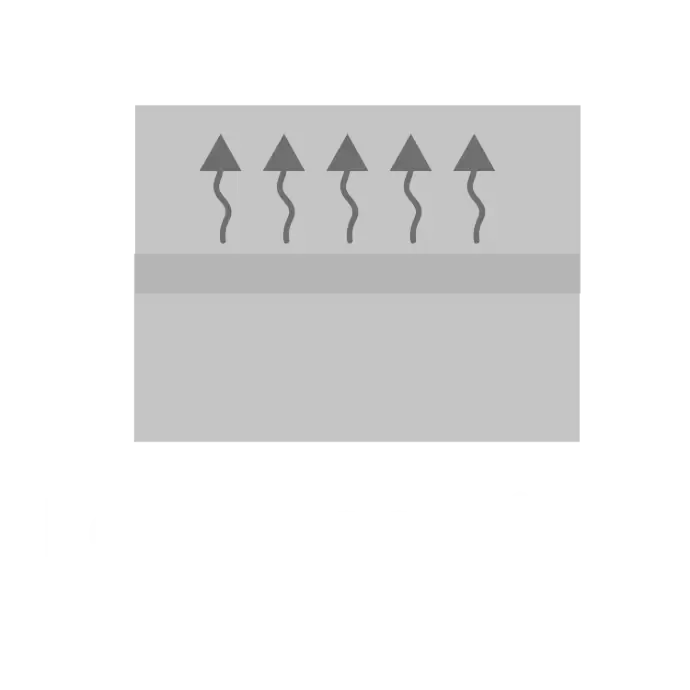
CYANOACRYLATE ADHESIVE
ADINOX® C50 Low Odor Cyanoacrylate
Low Odor Methoxyethyl Cyanoacrylate
Standard Packaging
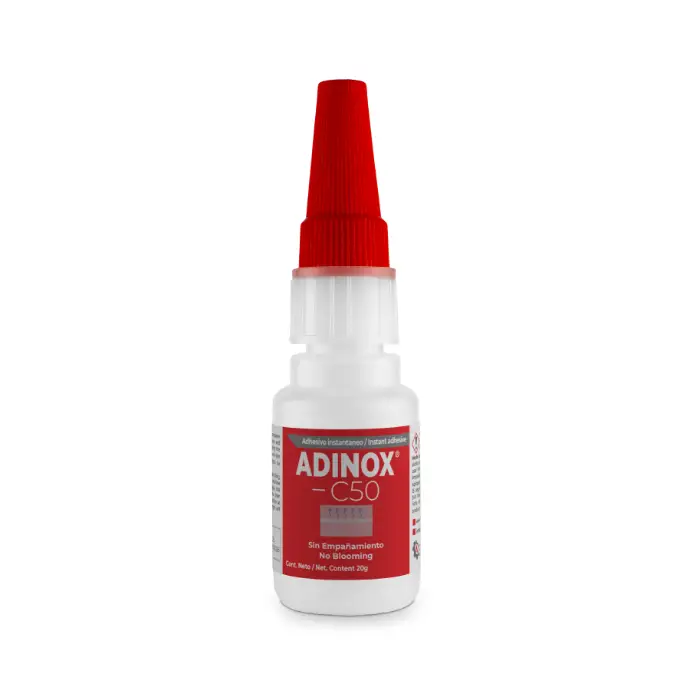
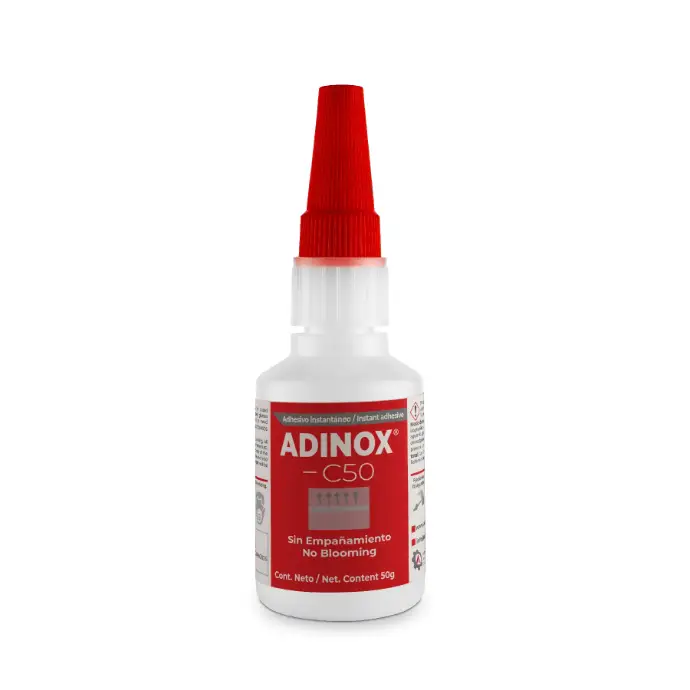
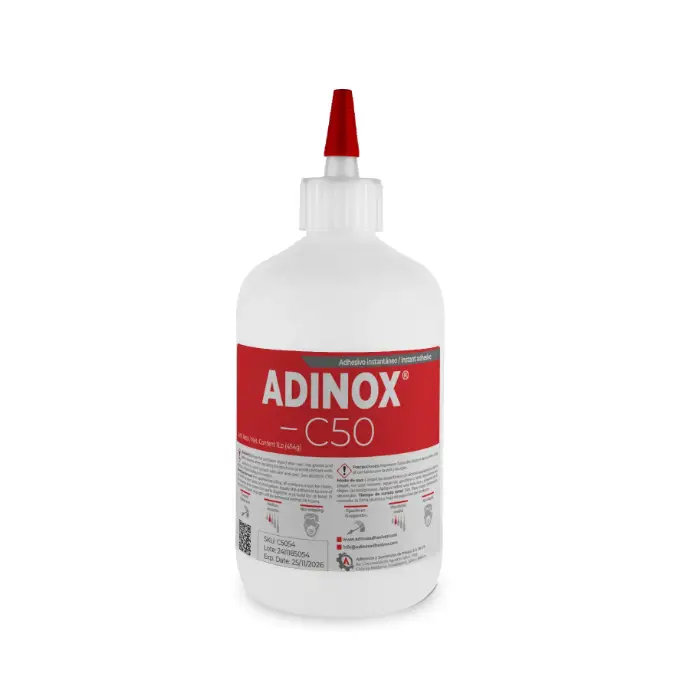
20 g
0.71 oz
50 g
1.76 oz
454 g
1 lb
About ADINOX C50 Low Odor Cyanoacrylate
ADINOX® C50 is a high-viscosity low odor cyanoacrylate — a methoxyethyl instant adhesive — formulated for demanding industrial applications. Unlike standard ethyl cyanoacrylates, C50 uses a methoxyethyl cyanoacrylate chemistry that delivers significantly reduced odor and minimal blooming during the bonding process.
This low odor cyanoacrylate — a low odor instant adhesive and non-fogging cyanoacrylate — delivers fast, reliable bonds on woods, metals, elastomers, and plastics with excellent gap-filling performance for high-precision assemblies. Its low bloom formula makes it the preferred choice in environments where VOC control is essential, including cleanrooms and optical assemblies.
High-Viscosity Gap-Filling Performance
- Viscosity: 1,200 - 1,500 cP - fills gaps in imprecise joints
- Lap shear strength up to 2,030 PSI on beech wood
- Tensile strength: 2,610 - 3,770 PSI (steel/steel)
- Bonds 9 substrates: 3 woods, 4 plastics, 2 metals
- 100% strength retention in motor oil (vs 90% for standard ethyl CA)
Low Bloom Cyanoacrylate - Clean Bond Lines
- Minimal white residue (low bloom) around the bond line
- Non-fogging cyanoacrylate - preserves optical clarity near joints
- Critical for visible assemblies, lenses, and transparent components
- Eliminates the need for post-bonding cleaning in cosmetic applications
Low Odor Cyanoacrylate - Methoxyethyl Chemistry
- Significantly reduced odor compared to standard ethyl cyanoacrylates
- Methoxyethyl base produces fewer irritating vapors in enclosed workspaces
- Ideal for cleanroom, electronic, and optical assembly environments
- Reduces worker discomfort in high-volume production lines
Technical Information
Uncured Product Properties
| Chemical Base | Methoxyethyl cyanoacrylate |
| Appearance | Colorless liquid |
| Viscosity (77°F, Spindle 1 @ 20 rpm) | 1,200 - 1,500 cP |
| Specific Gravity | 1.06 |
| Flash Point (TCC) | 185°F |
| Shelf Life (refrigerated, unopened) | 12 months |
Cured Product Properties
Substrate | Solid, colorless |
Beech Wood | 2,610 – 3,770 PSI |
ABS | -76 to 176°F |
Carbon Steel | 293°F |
Pine Wood | 1.49 |
Oak Wood | 5.4 |
Acrylic | 24 hours |
Fixture Times - Woods (at 68°F / 65% RH)
Substrate | Fixture Time |
Beech Wood | 15 sec |
Pine Wood | 30 sec |
Oak Wood | 90 sec |
Fixture Times - Plastics & Metals (at 68°F / 65% RH)
Substrate | Fixture Time |
Carbon Steel | 10 sec |
ABS | 30 sec |
Aluminum | 55 sec |
PVC | 60 sec |
Polycarbonate | 60 sec |
Acrylic | 105 sec |
Lap Shear Strength (ASTM D 1002 / ISO 4587)
Substrate | Shear Strength (PSI) |
Beech Wood | 2,030 |
ABS | 1,740 |
Carbon Steel | 1,740 |
Pine Wood | 1,595 |
Oak Wood | 1,595 |
Acrylic | 1,305 |
Polycarbonate | 1,305 |
PVC | 1,305 |
Aluminum | 435 - 725 |
Chemical Resistance (on carbon steel, 12 months immersion)
Medium | Strength Retained |
Unleaded Petrol | 100% |
Ethanol | 100% |
Trichloroethane | 100% |
Air | 100% |
Motor Oil | 100% |
Water | 60% |
98% RH | 60% |
Temperature Resistance (on carbon steel, cured 1 week at 72°F)
Medium | Strength Retained |
32°F | 100% |
140°F | 88% |
176°F | 68% |
212°F | 38% |
248°F | 15% |
How to Use ADINOX C50?
4. Curing
- Moisture on the substrate surface initiates the cure
- Allow 24 to 72 hours for full strength development depending on gap, materials, and conditions
- Gaps slow down curing - activators can improve cure speed
3. Assemble Parts
- Assemble parts immediately - (brief adjustment time)
- Hold firmly until the has set
- For large gaps , use ADINOX® 712 activator
2. Apply Adhesive
- Apply adhesive to one of the surfaces to be bonded
- Do not use tools to spread the adhesive
- High viscosity (1,200-1,500 cP) allows controlled bead application on vertical surfaces
1. Surface Preparation
- Surfaces must be clean and free of grease, oil, and contaminants
- Degrease with ADINOX® DS 400 degreaser (or acetone)
- For low-energy plastics (PE, PP), use ADINOX® 770 surface activator
Cleaning & Removal
| Uncured (immediate) | ADINOX® DS 400 degreaser, acetone, or cyanoacrylate remover |
| Cured | Cyanoacrylate remover or mechanical removal |
| Skin contact | Soak in warm soapy water. Do NOT force apart. |
Get the ADINOX C50 low odor cyanoacrylate through our authorized distributor network. Available in 20 g, 50 g, and 1 lb bottles.
Join our distributor network and offer your customers a low odor cyanoacrylate that is low bloom and non-fogging, ideal for cleanroom and precision assembly environments.
Become a Partner
Where to Buy?
If you are using ADINOX C50, you may be interested in
Si usa ADINOX C50, también le puede interesar
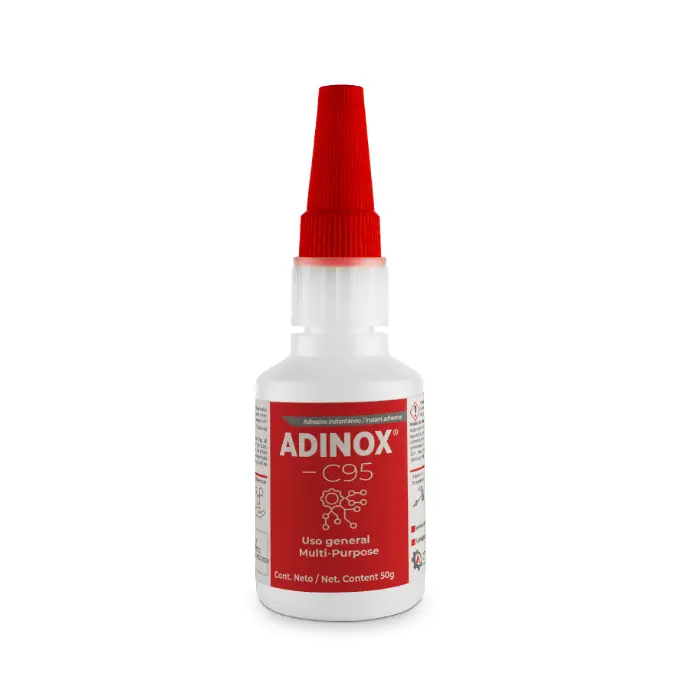
ADINOX® C95
Low-Bloom Ethyl Cyanoacrylate
Low-bloom ethyl CA alternative when methoxyethyl chemistry is not required.
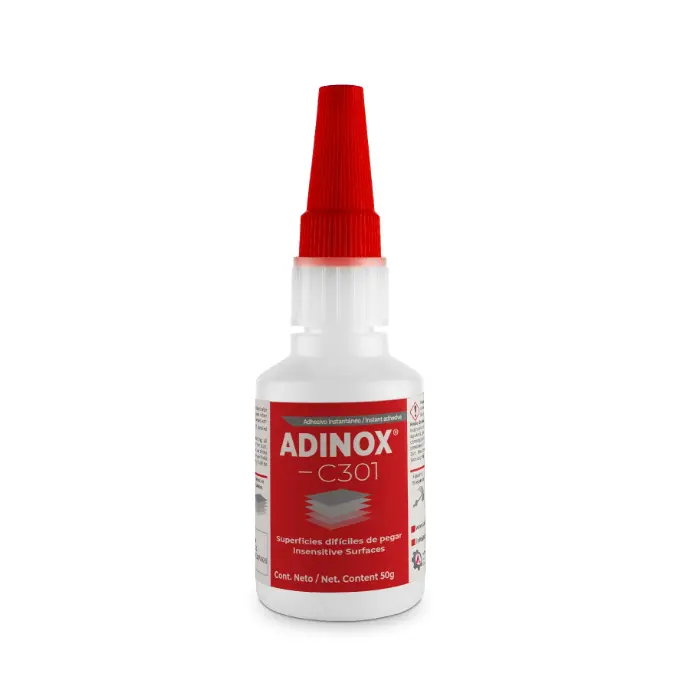
ADINOX® C301
Surface Insensitive Cyanoacrylate
Ideal when minimal gap and fastest fixture time are needed. MIL-PRF-46050 compliant.
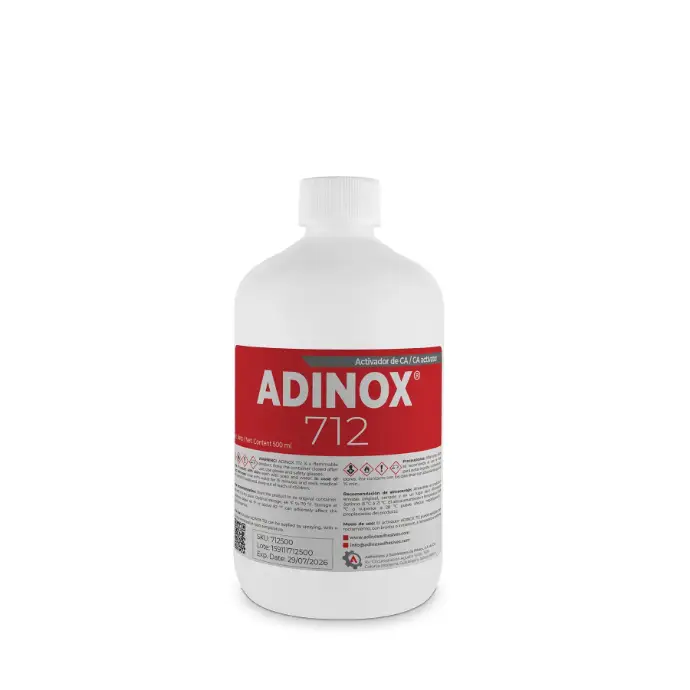
ADINOX® 712
Cyanoacrylate Activator
Accelerates cure on inactive surfaces and large gaps. Essential companion for C50.
* Tip: For bonding polyethylene (PE) or polypropylene (PP), pre-treat the surface with ADINOX® 770 primer before applying C50. This improves adhesion on low surface energy plastics. Performance depends on surface preparation and contamination level.
Frequently Asked Questions
How does a low odor cyanoacrylate like ADINOX C50 differ from ethyl cyanoacrylate?
- ADINOX C50 is a low odor cyanoacrylate built on a methoxyethyl monomer base instead of standard ethyl cyanoacrylate. This chemistry produces significantly less odor and vapor irritation during application, and generates minimal white residue (blooming) around bond lines. Ethyl CA products like C301 offer faster fixture times but with more noticeable odor and bloom.
What is blooming in cyanoacrylate adhesives?
- Blooming (also called frosting or fogging) is a white haze that forms around cyanoacrylate bond lines when adhesive vapors settle on nearby surfaces and polymerize. ADINOX C50 is a low bloom cyanoacrylate and low odor cyanoacrylate that minimizes this effect, making it ideal for visible assemblies, optical components, and applications where cosmetic appearance matters.
Is ADINOX C50 truly odorless?
- ADINOX C50 is a low odor cyanoacrylate and low odor instant adhesive with significantly reduced vapor emission compared to standard cyanoacrylates. While not completely odorless, the methoxyethyl chemistry produces far less irritation to eyes and respiratory tract. It is the preferred choice for enclosed production environments and applications where worker comfort is a priority.
How should I store ADINOX C50?
- Store refrigerated at 36-50°F in the original sealed container, away from moisture sources. Refrigeration provides optimum stability with a 12-month shelf life. Maximum storage temperature: 77°F. Avoid prolonged exposure to direct light.
What substrates can C50 bond?
- ADINOX C50 bonds 9 tested substrates across three categories: woods (beech, pine, oak), plastics (ABS, PVC, polycarbonate, acrylic), and metals (carbon steel, aluminum). It is particularly effective on wood substrates, achieving 2,030 PSI shear strength on beech. For low surface energy plastics like PE or PP, use ADINOX 770 primer.
What temperature range can C50 withstand?
- ADINOX C50 operates from -76°F to 176°F. It retains 100% strength at 32°F, 88% at 140°F, and 68% at its upper service limit of 176°F. The softening point is 293°F. For higher temperature requirements, consider ADINOX C388 with service up to 280°F.
Can C50 bond polyethylene (PE) and polypropylene (PP)?
- PE and PP are low surface energy plastics that require surface pre-treatment for cyanoacrylate bonding. Apply ADINOX® 770 primer to the PE/PP surface before bonding with C50. The primer increases surface energy, enabling reliable adhesion on these otherwise difficult substrates.
Is C50 suitable as a cyanoacrylate for electronics and cleanroom assemblies?
- Yes. ADINOX C50 is specifically designed for electronics and precision environments. Its low odor and non-fogging formula minimize vapor contamination on circuit boards, optical lenses, and sensitive components. The methoxyethyl chemistry reduces white residue (blooming) that could affect contact surfaces or optical clarity. This makes C50 the preferred low odor cyanoacrylate for cleanroom, electronics, and optical assembly applications.
How does C50 compare chemically to standard ethyl cyanoacrylate?
- The methoxyethyl monomer in C50 provides two key advantages over standard ethyl cyanoacrylate: lower odor and reduced blooming. On chemical resistance, C50 retains 100% strength after 12-month immersion in motor oil - outperforming standard ethyl CA which typically retains 90%. Both achieve 100% retention in unleaded petrol, ethanol, and trichloroethane. For prolonged water or high-humidity exposure, note that both types show reduced retention (~60%); factor this into the application design.