WHAT IS CYANOACRYLATE
How Cyanoacrylate Adhesive Works — Technical Insight
ADINOX offers a cyanoacrylate portfolio with in-house development capabilities for instant adhesive formulations — from standard ethyl cyanoacrylate and methyl cyanoacrylate grades to custom-engineered solutions. With a production capacity exceeding 10 tons per month, we supply cyanoacrylate adhesives to assembly lines, OEM programs, and industrial operations requiring consistent quality and dedicated stock.
Our portfolio includes 8 standard CA adhesive formulations — from cyanoacrylate adhesive grades as thin as 25 cP for capillary wicking to 12,500 cP thixotropic gels for vertical surfaces. Every formulation is developed and manufactured at our facility, allowing us to adjust viscosity, cure speed, flexibility, and thermal resistance to match specific production requirements.
Beyond the standard portfolio, ADINOX develops custom CA adhesive formulations for processes that demand a specific viscosity, UV-initiated cure, rubber-toughened flexibility, or two-component gap-filling systems — engineered to your production specifications.
As a direct cyanoacrylate supplier, ADINOX controls every stage from monomer selection to final packaging — available in 10 g, 20 g, 50 g, 1 lb and 2 kg formats. Our production infrastructure supports high-volume programs with consistent batch-to-batch quality and dedicated inventory.
Why Industries Choose ADINOX as Their Cyanoacrylate Supplier

8 INSTANT ADHESIVE GRADES FROM ADINOX — ENGINEERED CYANOACRYLATE PORTFOLIO
Surface insensitive, low odor, rubber toughened, flexible, gap filling, gel, wicking and temperature resistant — all from ADINOX Serie C. If your process requires a different viscosity, UV photoinitiator-accelerated cure, or a two-component flexible system, ADINOX can develop it.
FIXTURE IN 5–75 SECONDS
From ultra-fast wicking (ADINOX® C306 at 5 sec on steel) to controlled gel (ADINOX® C54 at up to 75 sec for repositioning), match your line speed exactly.
TENSILE OVER 3,480 PSI
ADINOX® C388 delivers the highest tensile strength of any cyanoacrylate adhesive in the portfolio — a heat resistant, rubber toughened, black instant CA with thermal resistance up to 280 °F.
VISCOSITY FROM 25 TO 12,500 cP
Every cyanoacrylate adhesive viscosity covered: water-thin wicking for pre-assembled parts, medium for general bonding, high for gap filling, and thixotropic gels for vertical surfaces.
LOW ODOR CYANOACRYLATE FOR ELECTRONICS AND OPTICAL ASSEMBLY
Methoxyethyl-based ADINOX® C50 minimizes the strong odor and white residue (blooming) typical of ethyl CA — critical for electronics and optical assemblies.
DIFFICULT SUBSTRATES WITH ADINOX® 770
The ADINOX® 770 adhesion promoter enables ADINOX® Serie C cyanoacrylates to bond polyethylene, polypropylene and silicone — substrates that standard CA cannot wet.
Cyanoacrylate Types — Performance Comparison by Grade
Each monomer base delivers a different performance profile. Select based on your dominant requirement.
PARAMETER | METHYL | ETHYL | ALKOXY | METHOXYETHYL |
Best application | Metal bonding | General purpose | Cosmetic / medical | General purpose |
Impact resistance | Low | Low * | Low | Medium |
Chemical resistance | Medium | High | Very high | High |
Thermal resistance | Low (< 176 °F) | Medium (< 212 °F) | High (< 248 °F) | Medium (< 176 °F) |
Blooming | High | Moderate | Low | Very low |
Odor | Very strong | Strong | Moderate | Low |
Moisture resistance | Low | Moderate | High | Very high |
ADINOX products | — | C301, C306, C388, C95, C1000, C1500, C54 | — | C50 |
* Ethyl CA with rubber toughening (ADINOX® C388) achieves high impact resistance and extended thermal range up to 280 °F. Standard ethyl grades are brittle and limited to ~200 °F.
Main Parameters of ADINOX Adhesives
8 standard grades — steel/steel substrate — technical specifications
Don't see your current viscosity or cure speed? ADINOX develops custom CA formulations — adjusted viscosity, added components, or modified cure systems — for specific process requirements. Find a Distributor →
Select ADINOX Cyanoacrylate by Requirement
NEED | ADINOX | KEY SPEC |
Surface insensitive, fast assembly | 90–120 cP · 3,190 PSI · 8–12 sec fixture | |
Low odor, low bloom | 1,200–1,500 cP · Methoxyethyl · –76 to 176 °F | |
Impact, vibration, heat | 350–480 cP · >3,480 PSI · Black · –65 to 280 °F | |
Plastics and rubber, minimal bloom | 70–95 cP · 3,190 PSI · Reduces bloom · Minimal odor | |
Gap filling, no drip | 850–1,100 cP · >1,740 PSI · No drip | |
Gel / vertical surfaces | 9,500–12,500 cP · Gel · 3,480 PSI · Max repositioning | |
Very high viscosity, porous substrates | 1,250–1,600 cP · >1,740 PSI · < 20 sec fixture | |
Wicking / capillary bonding | 25–40 cP · 3,190 PSI · 5–12 sec · MIL-PRF-46050 Class 1 | |
Accelerate cure time | Activator · Compatible with all ADINOX® Serie C | |
Bond PE, PP, silicone | Adhesion promoter · Exclusive for ADINOX® Serie C |
Standard presentations
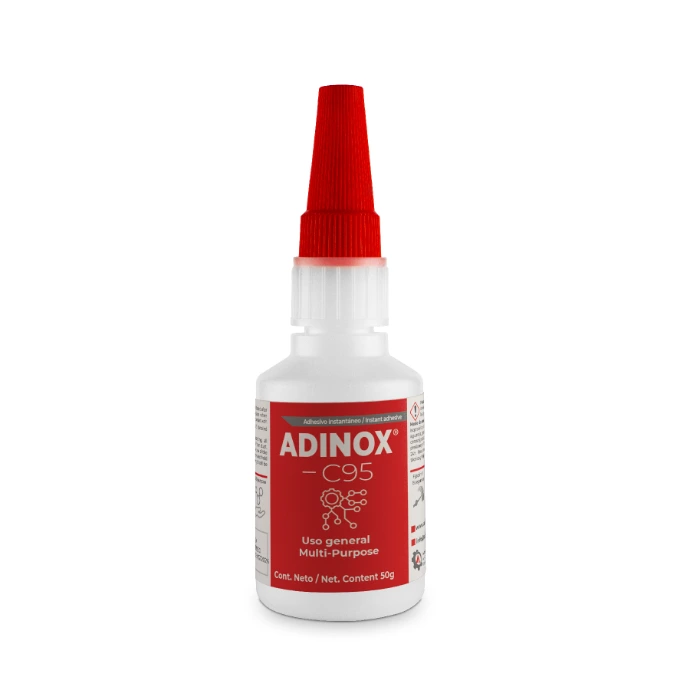
50g (1.76 oz)
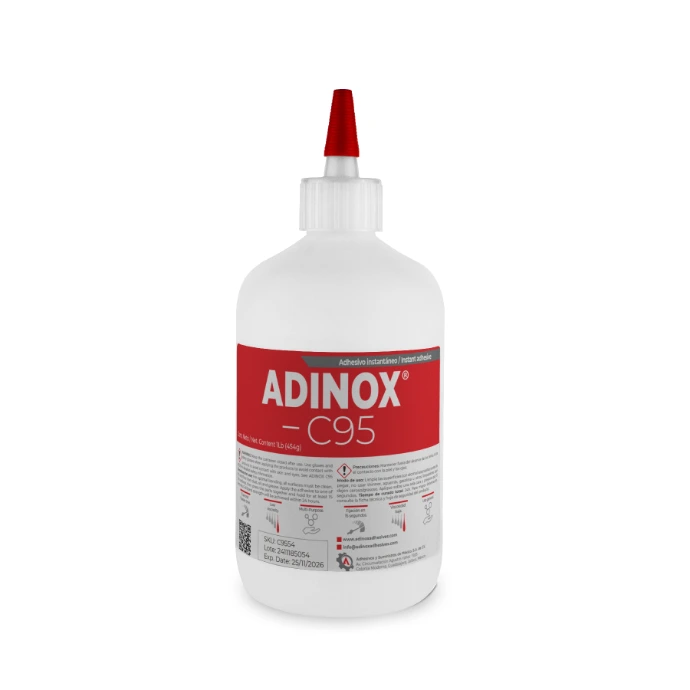
1 lb (454 g)
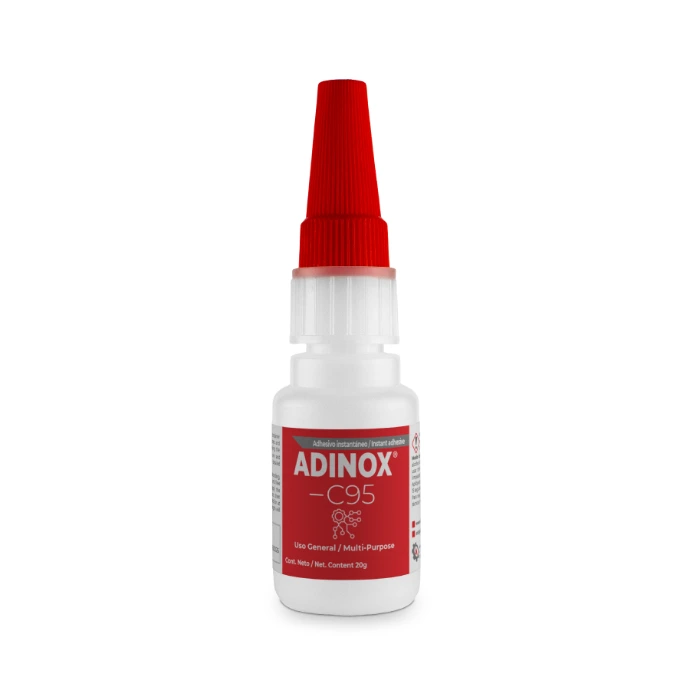
20g (0.70 oz)
Most ADINOX cyanoacrylate grades are available in 10 g, 20 g, 50 g, 1 lb (454 g) and 4.4 lb (2 kg) formats. C54 (thixotropic gel) is available in 20 g and 300 g only. ADINOX chemical formulations can be adjusted to any viscosity, format and specification according to customer needs.
Aplications
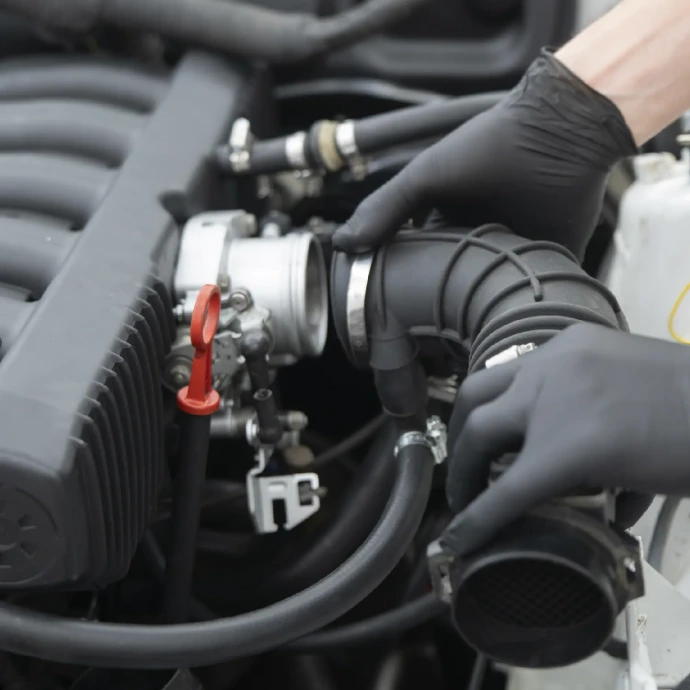
Automotive

Electronics

Singage

Maintenance
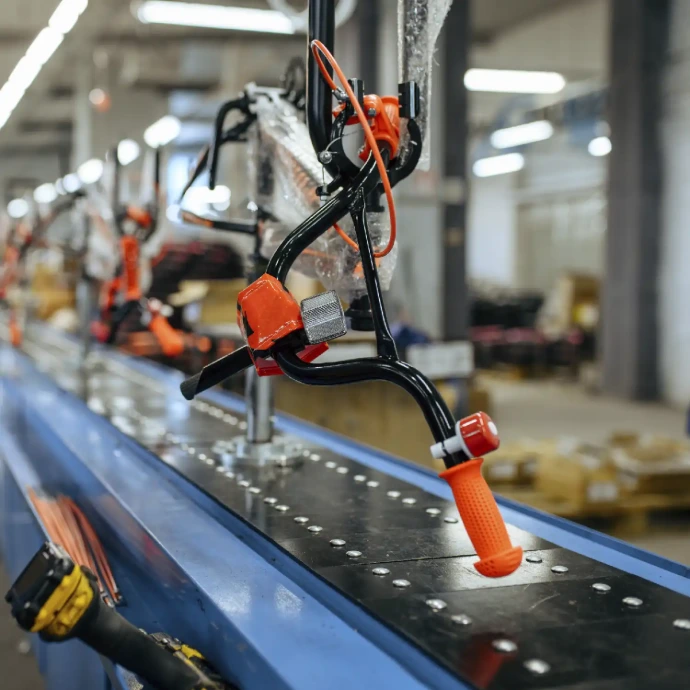
Manufacturing
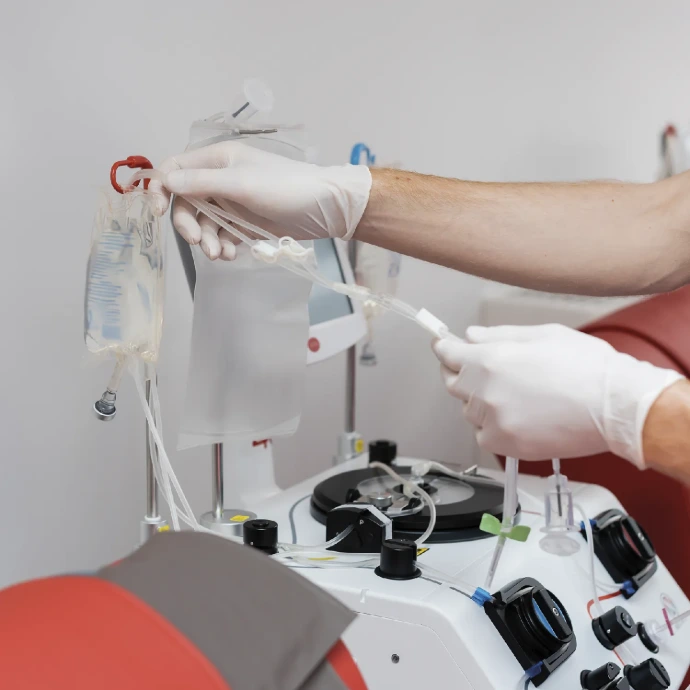
Medical
Frequently Asked Questions About Cyanoacrylate Adhesives
Is cyanoacrylate the same as super glue — how do ethyl and methyl grades compare?
Yes, super glue is the consumer name for cyanoacrylate adhesive. Industrial cyanoacrylate formulations, however, are engineered for specific viscosities, cure speeds, operating temperatures and substrate compatibility that consumer products do not address.
Is there a flexible cyanoacrylate for assemblies with vibration?
Standard cyanoacrylate adhesives are rigid after cure. For assemblies subject to impact or vibration, ADINOX® C388 (rubber toughened, –54 to 137 °C) provides the highest impact resistance in Serie C. For applications requiring true elongation or a flexible cyanoacrylate system, ADINOX develops custom two-component CA formulations — submit your requirements.
What is a gap filling cyanoacrylate?
A gap filling cyanoacrylate has high viscosity (850–1,600 cP) that prevents the adhesive from draining out of larger clearances before curing. ADINOX® C1000 (850–1,100 cP) and ADINOX® C1500 (1,250–1,600 cP) are the gap filling grades in the Serie C portfolio — rated for joints up to 0.5 mm. For gaps above 0.5 mm, submit your requirements for a custom formulation.
When should I use a cyanoacrylate activator or accelerator?
Use ADINOX® 712 cyanoacrylate activator (also called cyanoacrylate accelerator) when the assembly line requires faster handling times, when bonding acidic or low-moisture surfaces, or when curing large gaps where the adhesive alone would cure too slowly. It is compatible with all ADINOX® Serie C cyanoacrylates.
Can a rubber toughened cyanoacrylate bond metal to rubber and plastic?
Yes. ADINOX® C388 is specifically designed for rubber-to-metal bonding. Its rubber toughened ethyl formulation delivers over 3,480 PSI tensile with impact and vibration resistance from –65 to 280 °F — the strongest CA in the ADINOX portfolio.
What is low bloom cyanoacrylate?
Blooming is the white haze that forms around the bond line when CA vapor condenses on nearby surfaces. Low bloom grades like ADINOX® C50 (methoxyethyl) and ADINOX® C95 (ethyl with advanced formula) minimize this effect — essential for electronics, optics and visible assemblies.
What surfaces does cyanoacrylate not bond to — are there surface insensitive grades?
Standard cyanoacrylate does not bond polyethylene (PE), polypropylene (PP), PTFE or silicone without surface treatment. ADINOX® 770 adhesion promoter, exclusive for the ADINOX® Serie C, enables bonding on PE, PP and silicone substrates.
Is cyanoacrylate waterproof?
Cyanoacrylate adhesives resist moisture exposure but are not designed for permanent submersion. Methoxyethyl grades like ADINOX® C50 offer the highest moisture resistance in the family. For submersion applications, consider ADINOX MS polymer sealants.
What is the shelf life of cyanoacrylate?
ADINOX cyanoacrylate adhesives have a shelf life of 12 months from manufacturing date when stored sealed at the temperature and humidity conditions stated in each product TDS.
How strong is cyanoacrylate adhesive?
Tensile strength on steel ranges from 2,610 PSI (ADINOX® C50, methoxyethyl) to over 3,480 PSI (ADINOX® C388, rubber toughened). ADINOX® C388 also delivers 2,900–3,916 PSI shear strength on steel-to-steel joints — the highest in the ADINOX CA portfolio.
How long does cyanoacrylate take to cure?
Fixture time ranges from 5 seconds (ADINOX® C306, wicking grade) to 75 seconds (ADINOX® C54, gel). Full cure is typically 24 hours at ambient conditions. Using ADINOX® 712 activator can reduce fixture time significantly when line speed demands it.
Versatile adhesive solutions for metals, composites, plastics, and more, with guaranteed quality and exceptional performance.
Join our distributor network and offer your customers high-quality adhesive solutions, backed by dedicated stock, reliability, and excellent technical support. Let's take your business to the next level!